How can an island thrive without exhausting its water, land, people and identity?
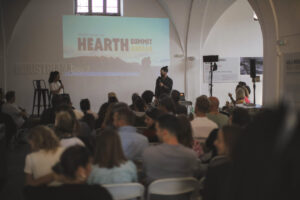
This question brought 160 participants from 15 countries and 20 islands across the Aegean and beyond to Santorini for Hearth Summit Aegean 2026, organised by Impact Hub Athens from 23 to 25 October.
From local government representatives and entrepreneurs to farmers, researchers, artists and civil society, the Summit created a meeting point for people to rethink what a sustainable island future can look like.
The starting point was clear: islands are facing increasingly complex challenges, from water scarcity and waste management to tourism pressure, vulnerable ecosystems and the resilience of local economies. But they are also places of resourcefulness, where generations of local knowledge, strong communities and new ideas can come together to create meaningful change.
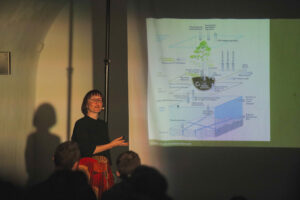
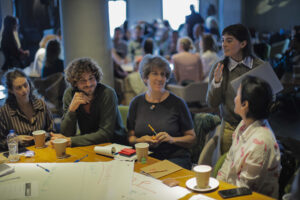
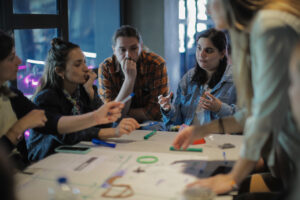
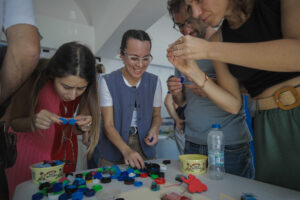
Rather than simply discussing what is not working, Hearth Summit Aegean focused on what can work. Through field journeys, hands-on workshops, panel discussions and more than 20 presentations of island initiatives, participants explored solutions that are already being implemented, as well as ideas that can be tested, adapted and scaled to the needs of different places.
And five key directions emerged.
Five ways to rethink the future of our islands
Making every drop of water count
Water is one of the most precious resources on an island, and managing it requires looking beyond conventional supply systems. Restoring traditional cisterns, collecting rainwater, reusing greywater through decentralised systems and putting treated wastewater from hospitality facilities to agricultural use can all help reduce pressure on drinking water supplies. These approaches connect traditional practices with contemporary technologies, turning water management into an opportunity to strengthen local production and resilience.
Tackling waste before it reaches the sea
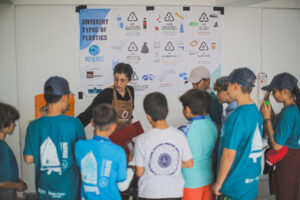
The best waste management strategy starts long before waste is generated. Understanding which materials enter an island, reducing single-use products, encouraging reuse and developing local processing solutions can help communities address the problem at its source. The goal is not simply to manage what is left behind, but to rethink the systems that create waste in the first place.
Making tourism work harder for local communities
Tourism can generate value far beyond visitor numbers. Stronger connections between hotels, farmers, winemakers and local craftspeople can help keep a greater share of tourism revenue within the island economy, supporting local businesses and livelihoods. But this also calls for a different way of measuring success: looking beyond arrivals and revenues to consider residents’ quality of life, the strength of local communities and the long-term wellbeing of the destination.
Building greater local autonomy in food and energy
Resilient islands are islands that can rely more on their own resources. Seed banks, drought-resistant crop varieties, the restoration of agricultural terraces and training in traditional dry-stone wall construction all demonstrate the value of local agricultural knowledge. Combined with year-round production and renewable energy initiatives, these approaches can reduce dependencies and strengthen local self-sufficiency.
Putting residents at the heart of decision-making
No sustainability strategy can succeed without the people who live in a place. Living Labs, local assemblies and closer collaboration between municipalities, businesses, start-ups and citizens can create the conditions for more inclusive and lasting solutions. Networks connecting islands can take this further, allowing communities to exchange experiences, learn from one another and turn individual initiatives into shared knowledge. The most meaningful solutions are those shaped together with the people who will make them happen.
These ideas did not emerge in isolation. They were shaped by the island itself and by the people, places and practices that participants encountered throughout the Summit.
Three days of learning from place
The first day set the tone, connecting the relationship between people and place with the need for local action. From the Fisher Guardian Workshop in Vlychada to the official opening at MATI Art Observatory, participants began exploring how local knowledge, creativity and collective responsibility can inspire change.
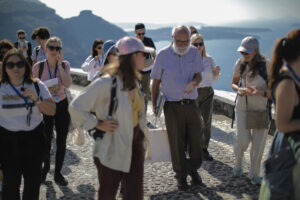
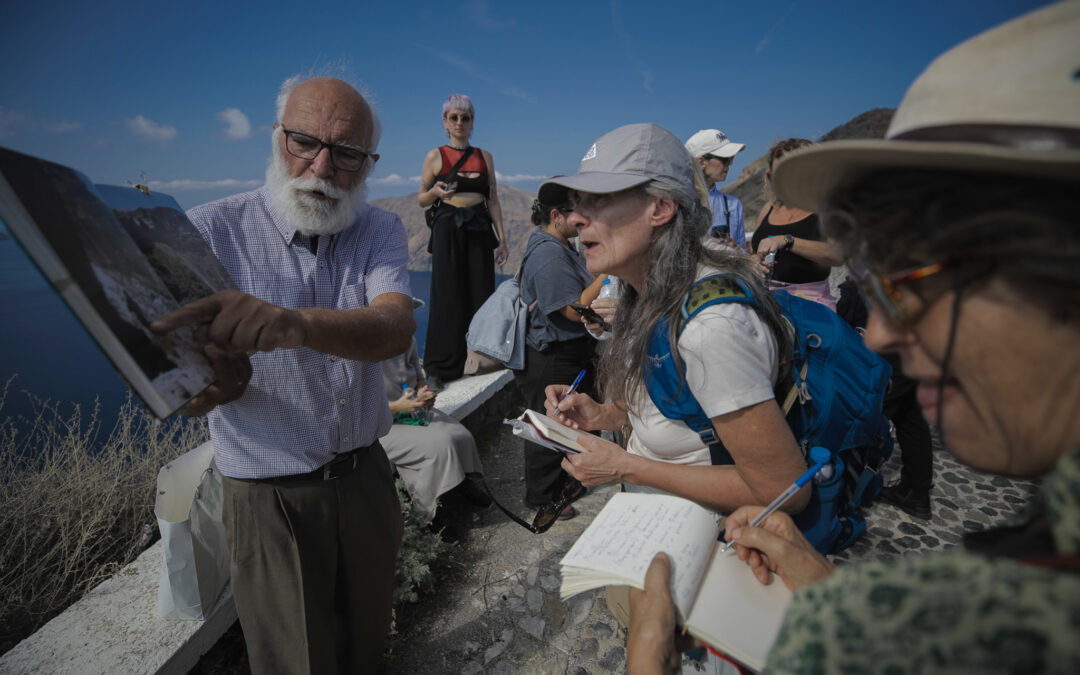
The second day opened up new perspectives on the future of the Aegean. Following discussions on alternative scenarios for island development, participants split into four field journeys, each exploring a different dimension of sustainability: waste, water and soil, biodiversity, and the relationship between vineyards and landscape. Moving beyond the conference setting, these journeys brought participants closer to the challenges and opportunities that shape everyday life on the island.
On the third day, the focus shifted towards the initiatives already making a difference across island communities. Discussions explored the idea of a post-tourism Aegean, while proposals connected environmental resilience with stronger local economies and a better quality of life for residents.
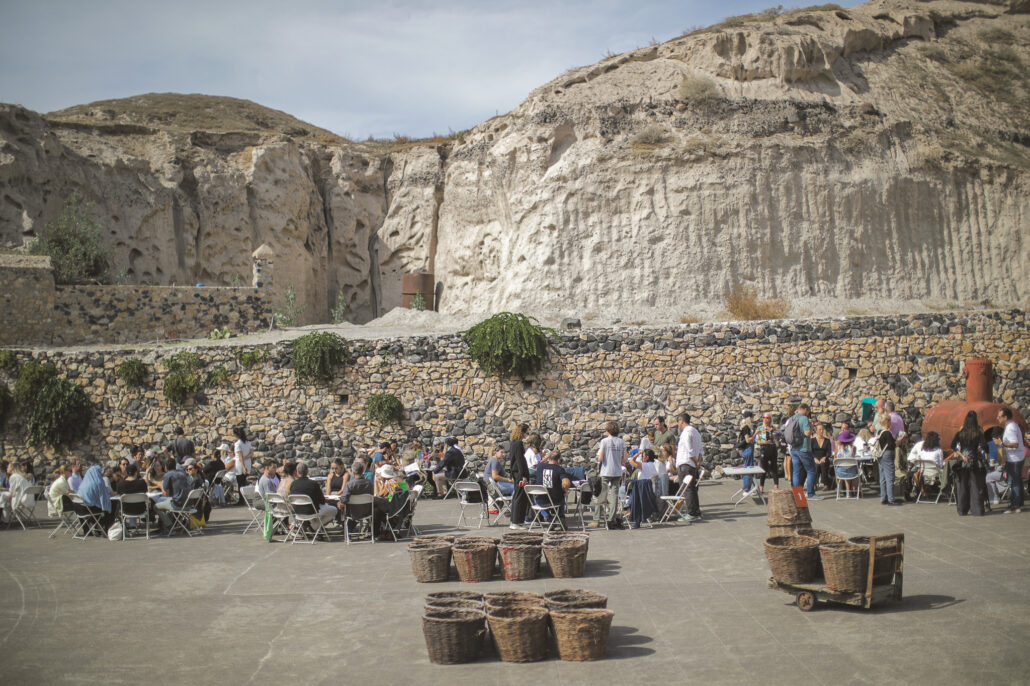
Across all three days, conversations continued through shared meals, artistic encounters, music and hands-on experiences. The Summit moved between dialogue and direct engagement with the landscape, reminding everyone that sustainability is not an abstract concept. It is something that takes shape through everyday choices, relationships and collective action.
From Santorini to the wider Aegean: What comes next?
Perhaps one of the most important outcomes of Hearth Summit Aegean 2026 was the recognition that no island needs to start from scratch. Across the Aegean and beyond, communities are already experimenting with new ways to manage resources, protect their landscapes, support local economies and involve residents in shaping their future.
The challenge now is to connect these experiences, create opportunities for collaboration and turn promising ideas into solutions that can be tested and adapted across different island contexts.
The conversation, therefore, does not end in Santorini. It continues wherever people come together to rethink how their islands can thrive.