

From Competitors to Collaborators
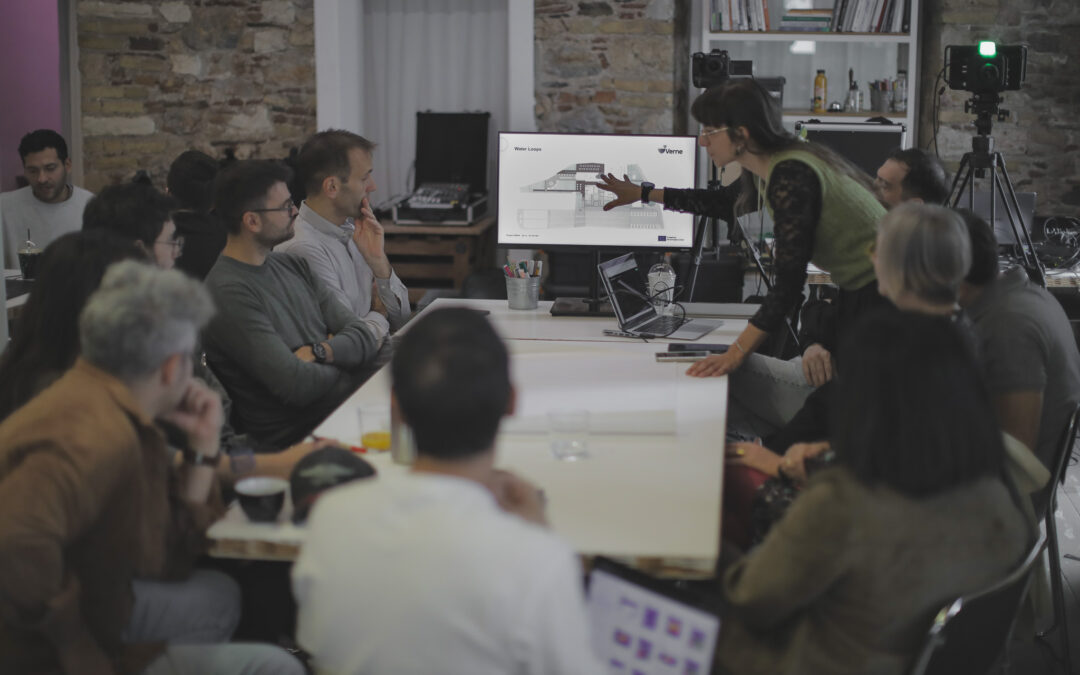
Athens, November 8, 2025 – At the Impact Hub Athens headquarters in central Athens, 13 tourism professionals spent Saturday afternoon grappling with a question that could reshape Greek tourism: how do you convince visitors to choose sustainability without sacrificing the luxury experience they expect?
The gathering marked the first Community of Practice meeting for VERNE’s Santorini pilot, hosted by Impact Hub Athens. Around the table sat an unlikely mix: hotel executives alongside NGO representatives, tech entrepreneurs next to university professors, construction specialists in conversation with tour operators.
Their mission was to co-design circular tourism solutions for an island that welcomes millions of visitors annually while struggling with water scarcity, waste management, and environmental pressure.
The Greek Paradox
The discussions quickly revealed Greece’s sustainable tourism paradox. Travellers who appreciate environmental choices consistently link them to luxury services quality, creating a narrow market segment. This presents a challenge: sustainable solutions require significant investment to develop and scale, but only premium travellers actively seek them out.
Meanwhile, Greece’s sustainable tourism sector is still emerging. Participants noted they’re pioneers building from scratch, attempting to create holistic sustainable experiences when most destinations only offer isolated green initiatives.
Perhaps the trickiest challenge involves data. IoT sensors and satellite monitoring can track resource use and demonstrate impact, but participants worried about overwhelming visitors with information that feels technical or guilt-inducing rather than engaging.
From Problems to Possibilities
The afternoon shifted from identifying barriers to imagining solutions. Ideas emerged quickly: reward tokens for guests who reduce resource consumption, redeemable at sustainable businesses across Santorini. Educational programs bringing local schools to learn about circular water and food systems. Precision agriculture combining weather satellites with soil sensors to optimize irrigation.
One proposal gained particular traction: experiential activities connecting visitors to circular systems through hands-on participation. Cooking classes using produce grown with recycled water. Traditional product-making workshops with estate-grown ingredients. Evening gatherings around biostoves fuelled by food waste.
Sophie Lamprou and Dimitris Kokkinakis from Impact Hub Athens facilitated the session using co-creation workshop methods designed to build on each participant’s expertise and foster collaborative thinking.
What’s Next
By session’s end, all participants committed to staying involved. Several have already scheduled follow-up actions to develop specific collaborations. Impact Hub Athens will convene the next Community of Practice meeting in coming months, with plans to invite additional stakeholders as the Santorini model takes shape.